These are the nine best day trips from Seoul, ranging from Nami Island and the DMZ to suspension bridges strung across volcanic gorges, all reachable in under three hours. For each of these Seoul day trips we've set out how to get there by public transport or car, best times to visit, and what you'll need to book ahead.
The best day trips from Seoul at a glance
Seoul is an excellent base for day trips, with plenty within easy reach of the city. We’ve picked out some lesser known places, plus two popular attractions to give you some variety. Here are the nine day trips from Seoul we’d recommend.
These nine day trips spread out in four directions from Seoul. To the north, you'll find the Hantangang Geopark and Jaein Falls, with the DMZ further along. The Gapyeong area is northeast, and you can pair Nami Island and the Garden of Morning Calm in one trip.
Hwadamsup is about an hour's drive to the southeast from Seoul. Further south is Gwangmyeong Cave on the city fringe, and Daedunsan further into Jeollabuk-do. Bukhansan is inside Seoul itself on the northern edge of the city.
If you only have one or two days, grouping trips by direction saves backtracking.
Disclaimer
All transport routes, ticket prices and opening times in this guide are correct as of August 2026, but they do change. We update this article regularly and would recommend checking Naver Map or KakaoMap for the latest public transport timetables before you travel. Both are more reliable than Google Maps for Korean bus and train routes.
1. Hantangang Geopark Sky Bridges (and Bidulginang Cascade)
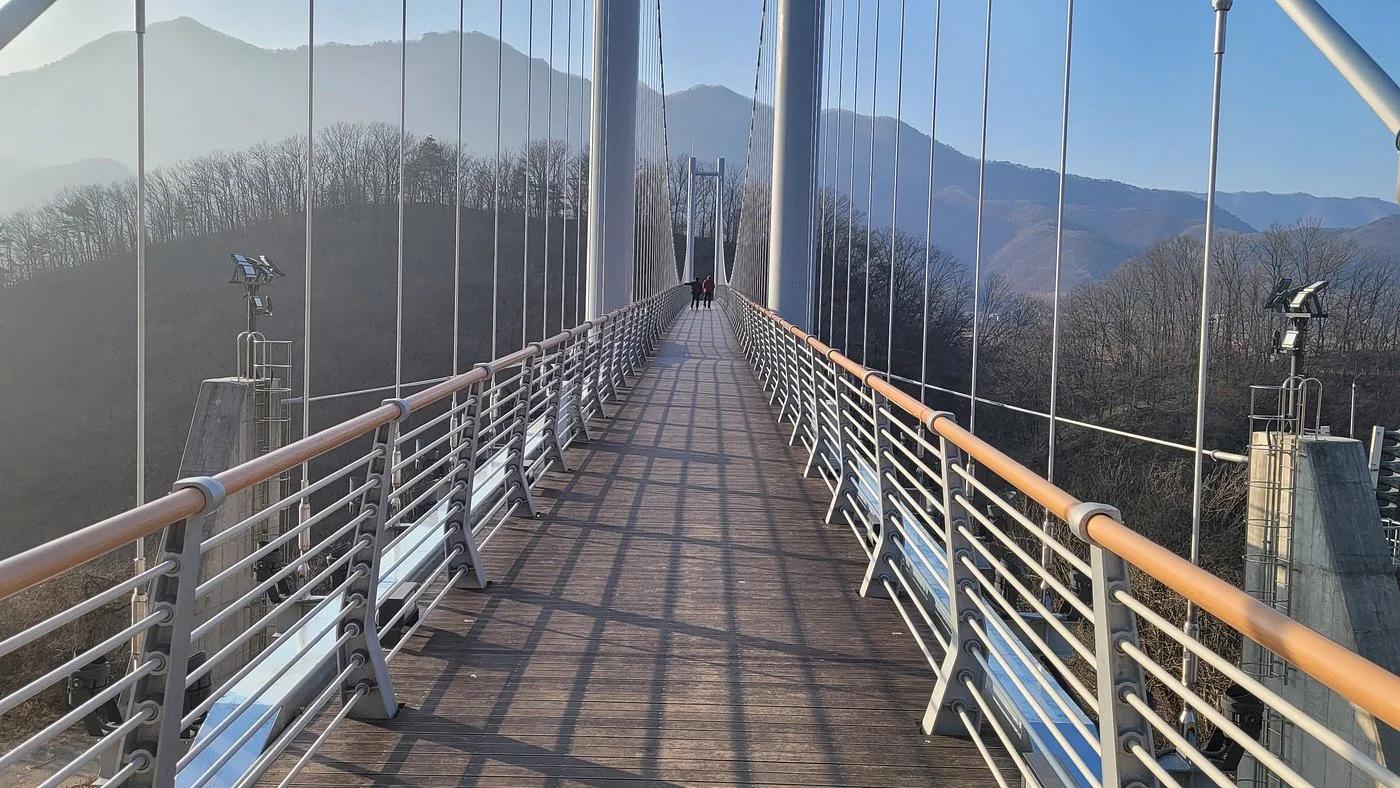
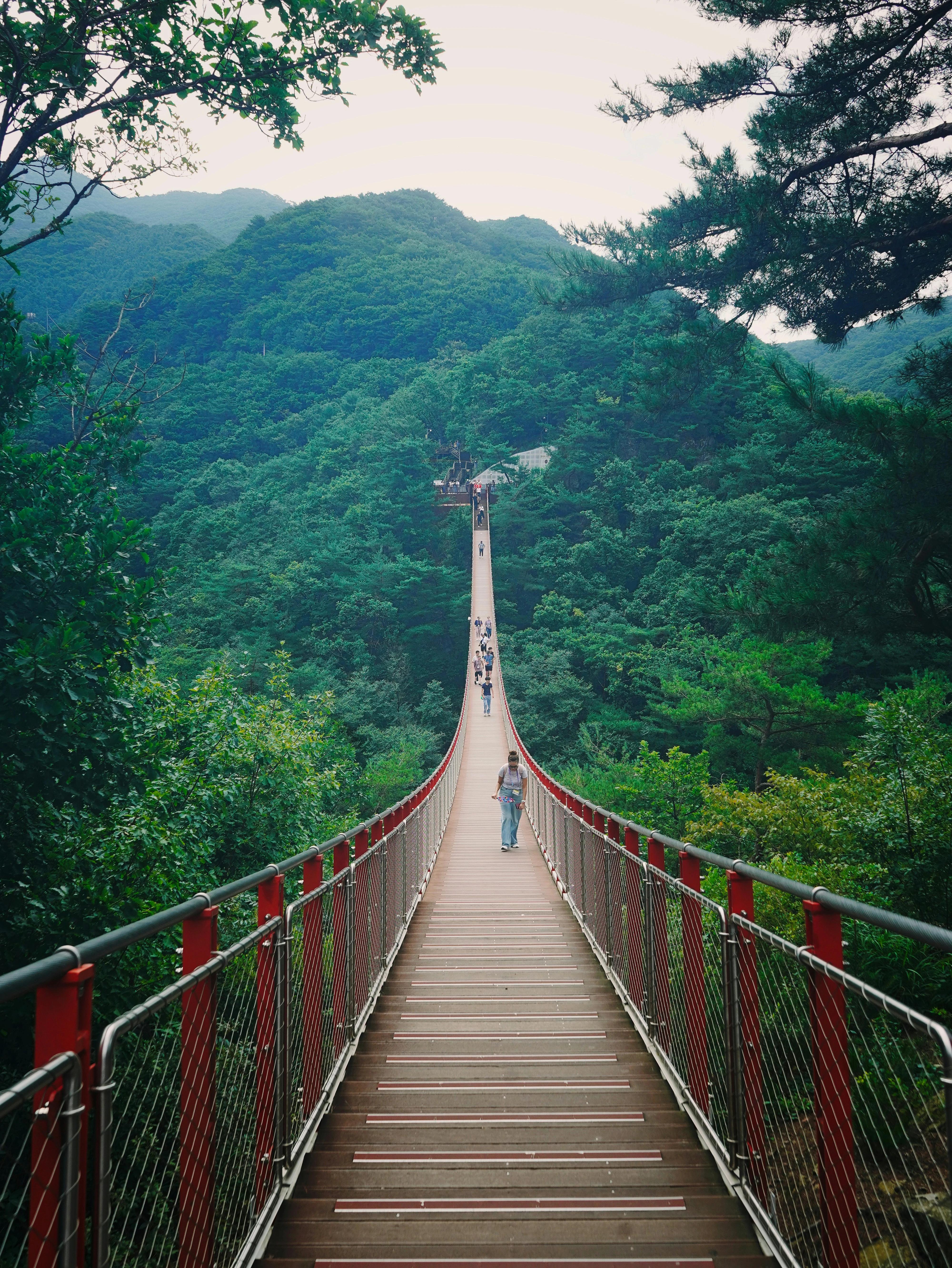
The Hantangang Geopark is a volcanic canyon region about 90 minutes north of Seoul, designated as a UNESCO Global Geopark in 2020 and spanning Pocheon, Yeoncheon and Cheorwon. The original straight Sky Bridge is a five-minute walk from the main carpark, and from there, a 2km canyon trail leads you to the newer Y-shaped bridge. You can also walk 5 minutes down from the carpark to see a small waterfall inside a basalt hollow called Bidulginang Cascade.
Why we added Hantangang Geopark Sky Bridges to our list
This spot lets you cross two distinct bridges over a volcanic basalt gorge. If you've watched Crash Landing on You, the original 200m Sky Bridge near the carpark may look familiar. Following the canyon path a further 2km brings you to the unique Y-shaped suspension bridge connecting three cliff sides. As a bonus, Bidulginang Cascade is just five minutes on foot from the carpark.
How to get to Hantangang Geopark Sky Bridges from Seoul
By car, it takes around 1.5 hours to reach the Hantangang Geopark carpark from Seoul. It’s roughly 60km north via Pocheon, and has a free car park right by the entrance.
Public transport does reach the falls and bridges, but you will need to plan your transfer timing carefully. Take Subway Line 1 to Cheongnyangni Station, then bus 3200 into Pocheon, getting off at the Sineup 7-tong stop. Cross to the IBK Bank stop and catch local bus 53 to the UNESCO Global Geopark and Bidulginang Falls stop, then walk eight minutes to the entrance.
Keep in mind that bus 53 is a rural feeder with only four to six departures a day. Check its times on Naver Map or KakaoMap, as Google Maps doesn't have the local timetables. Aim for an early bus 3200 so you reach Pocheon with plenty of time.
If you miss bus 53, a taxi from central Pocheon to Bidulginang takes 25 to 30 minutes and costs around 25,000 to 35,000 won. Driving or taking a tour is the most straightforward option, as recommended by official Korean heritage guides.
- TripJuggler recommends: This Pocheon day tour pairs the Y-shaped suspension bridge with other Pocheon highlights (affiliate link, this earns TripJuggler a small commission at no extra cost to you).
When to visit Hantangang Geopark Sky Bridges
Late spring through autumn is the best time to visit the Hantangang Geopark for the foliage. The falls freeze in winter, which looks striking, though keep in mind that walking open bridges in sub-zero winds can be cold. The Y-shaped bridge and main visitor facilities close on Tuesdays.
For lunch, Pocheon is the home of Idong galbi, charcoal-grilled marinated short ribs. We highly recommend stopping by Galbi 1987 Pocheon Idong Main Branch, one of the best restaurants for Idong galbi in the area.
2. Hwadamsup Botanic Garden
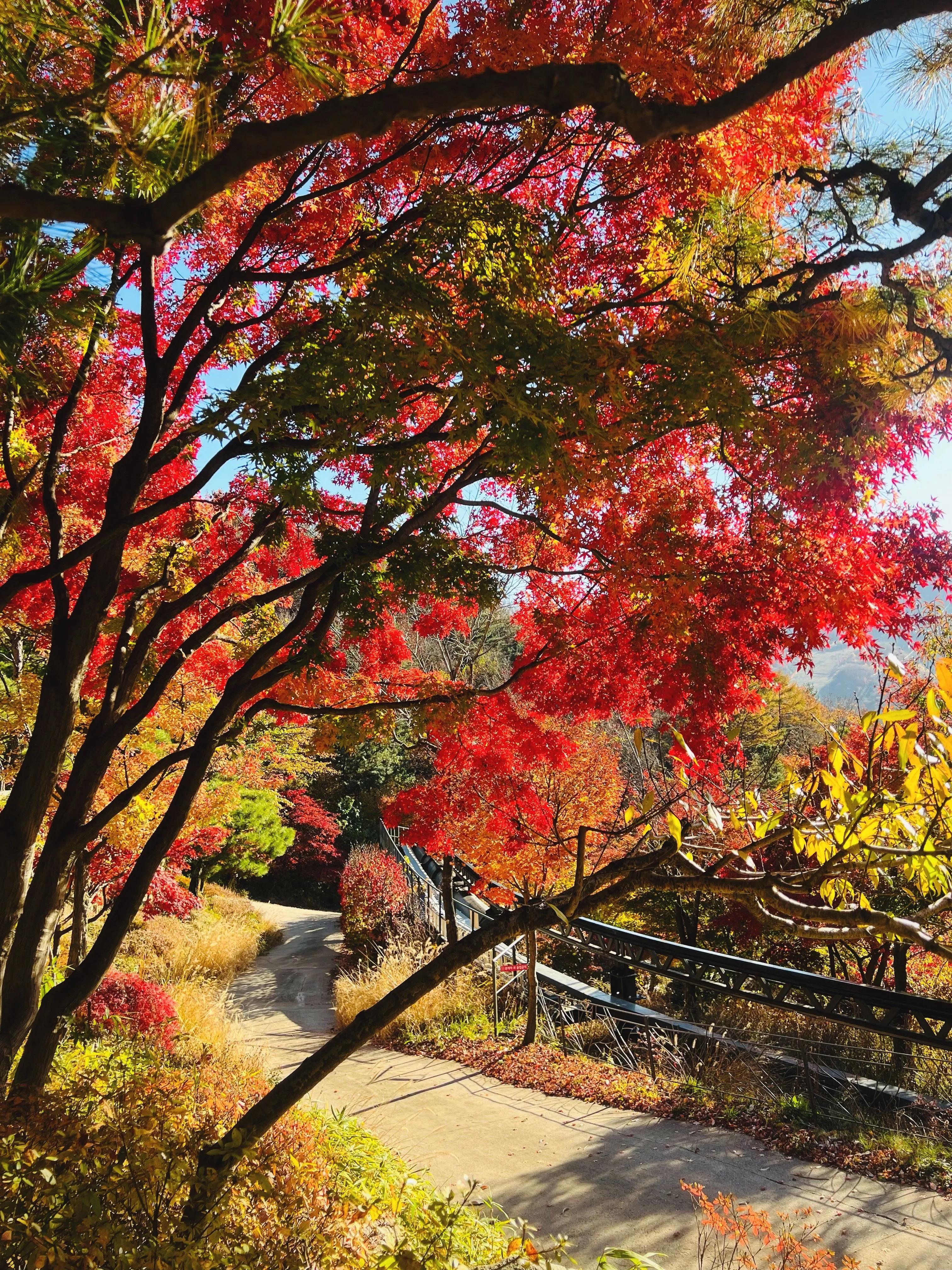
Hwadamsup is a botanic garden about an hour southeast of Seoul, with 17 themed gardens and over 4,000 plant species. It's best known for its moss and pine gardens and its autumn foliage when the maples change colour. There is also a monorail which carries you up the hillside and through the trees.
Why we added Hwadamsup to our list
Hwadamsup is one of the more comfortable nature day trips from Seoul. The path follows a raised wooden boardwalk through the whole hillside, so you can take in the forest without rough trails or a steep climb. It's a barrier-free trail, suitable for families with buggies or if you prefer a gentle walk rather than a hike. The full loop is around 5km and takes about two hours at an easy pace, with an optional monorail if you want to ride part of it.
How to book tickets for Hwadamsup
The garden uses a 100% reservation system, capped at 10,000 visitors a day. Online booking requires a Korean phone number. If you don't have one, you can't book ahead, so you’ll need to buy your ticket on the day at the gate with your passport. Arrive early to do this, especially in autumn.
- Tip: The monorail is a separate ticket, sold on the day only, and it sells out quickly. Buy it as soon as you get through the entrance.
How to get to Hwadamsup from Seoul
By car, it takes roughly 1.5 hours to reach Hwadamsup from Seoul. It’s roughly 52km southeast, with car parks at the entrance.
By public transport, take the Sinbundang Line to Pangyo Station, transfer to the Gyeonggang Line to Gonjiam Station, then catch a taxi to the garden entrance. The taxi costs around 10,000 won and takes about ten minutes.
If you'd rather go door to door, there are shuttle tours from Hongdae and other points in Seoul which include entry and transport, though most leave the monorail for you to buy on arrival.
- Start collecting your Seoul trip research on TripJuggler, and we’ll automatically turn all of your travel inspo into an itinerary, complete with a map, travel journal, and link to share with your friends and family.
3. Jaein Falls
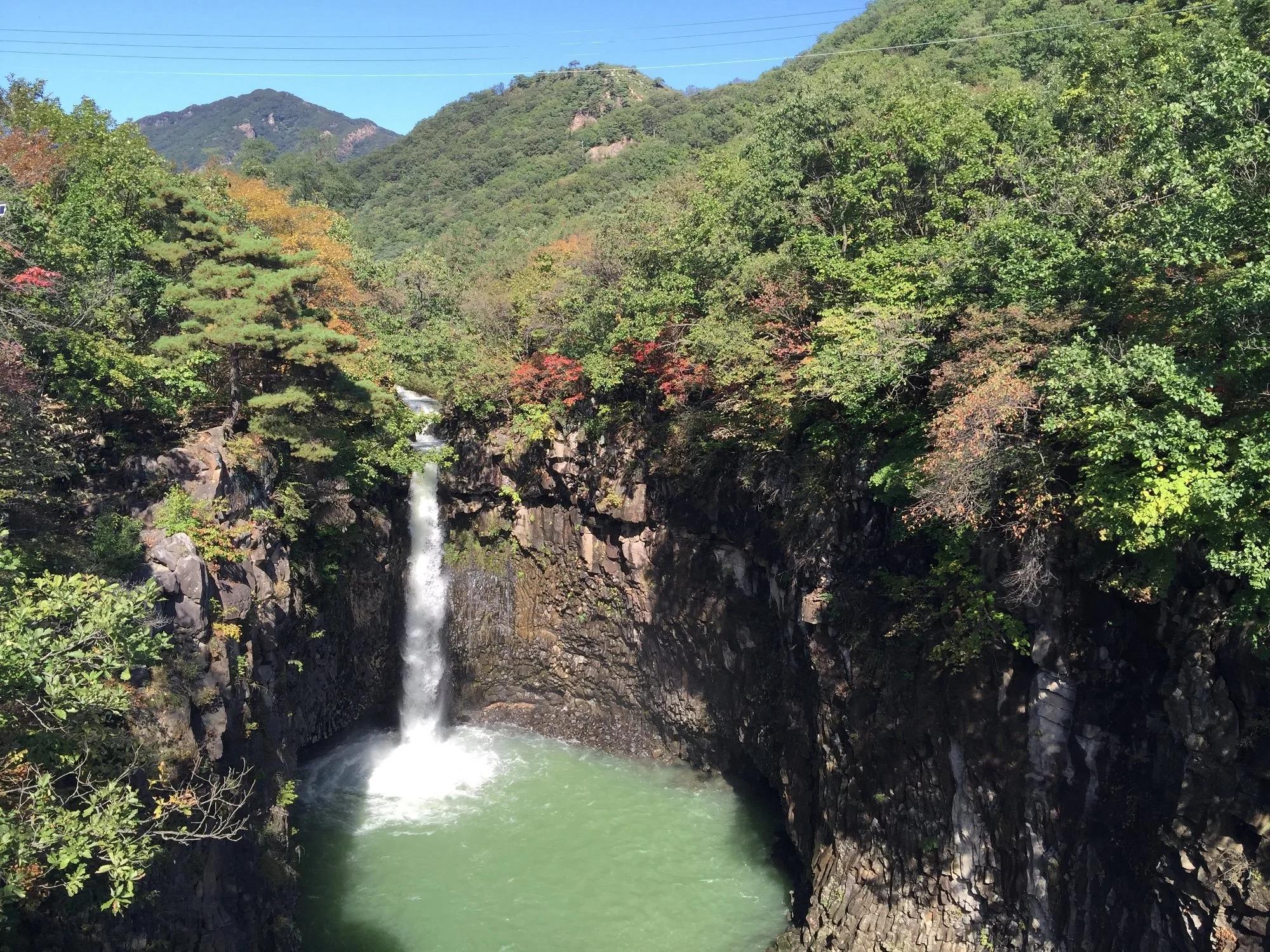
Jaein Falls is an 18-metre fall that drops over hexagonal basalt columns in Yeoncheon, about two hours north of Seoul. Like Bidulginang, it sits inside the Hantangang UNESCO Global Geopark, and the rock formations look a lot like the Giant's Causeway. There's a glass viewing platform above the fall and a suspension bridge across the gorge.
Why we added Jaein Falls to our list
For the geology, which is as striking as the waterfall. The fall is over an 18-metre cliff of columnar basalt, with small pools worn into the hexagonal rock. The glass platform lets you look straight down over the drop, and the suspension bridge gives you a wide view across the gorge. It's featured in a few K-dramas and films.
How to get to Jaein Falls from Seoul
By car, it takes around 80 to 90 minutes to reach Jaein Falls from Seoul via National Route 3, depending on city traffic. Free parking is available near the park entrance.
By public transport, take Seoul Subway Line 1 north to Yeoncheon Station. From there, the easiest option is a taxi to the park entrance, around 11km, which takes 15 to 18 minutes and costs 15,000 to 18,000 won.
Local buses also run from the station toward Gomun-ri, but they drop passengers roughly two kilometres short of the falls, leaving you with a 20-minute walk or a park shuttle to finish the trip. The whole journey by train and taxi takes around 2.5 hours each way.
When to visit Jaein Falls
You can visit Jaein Falls in any season, but each one looks different. Summer and autumn bring greenery and then red foliage around the gorge. In winter, the waterfall partly freezes.
The flow of the falls depends on recent rainfall. After a dry spell, there may be less water coming over the cliff. If you want to see it in full flow, check for recent rain before you go.
- Yeoncheon is known for makguksu, cold buckwheat noodles, which is an excellent option for a lunch stop. A spot we recommended near Jaein Falls is Cheongsan Noksu, known for their house-made buckwheat noodles and cold chicken broth.
4. Bukhansan National Park
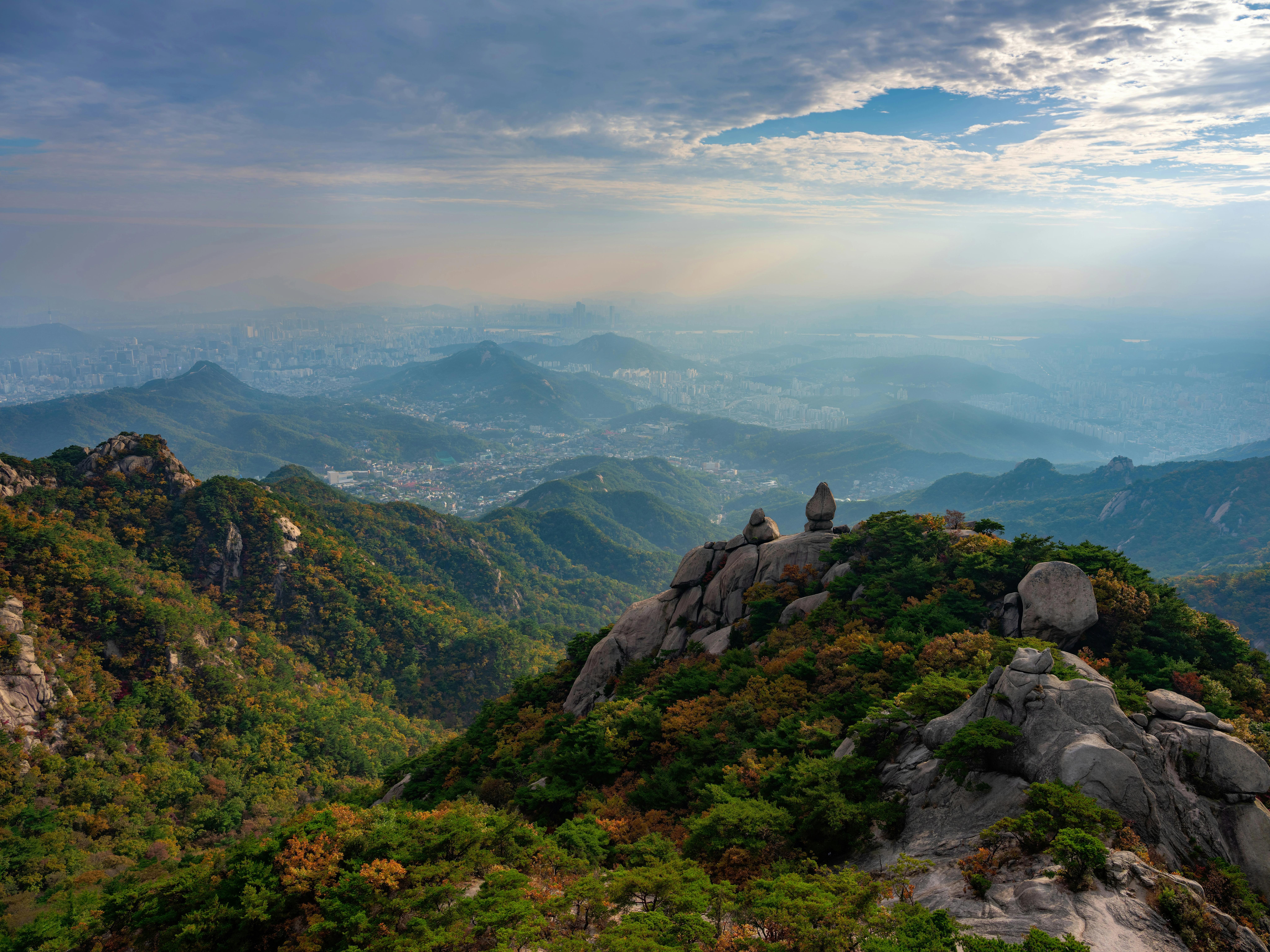
Bukhansan National Park is a granite mountain range on the northern edge of Seoul, reachable from the city centre in under an hour by subway and bus. Its highest peak, Baegundae, is 836 metres tall and looks out over the city. It receives around 5 million visitors a year and holds a Guinness World Record as the most visited national park per unit area. It's the only hike on this list you can reach without leaving Seoul.
Why we added Bukhansan National Park to our list
The most popular route is the Bukhansanseong Fortress course to Baegundae Peak, a 7.9km round-trip climb of stone steps and rocky paths, with a rope-assisted scramble near the summit. It's a proper rocky mountain, and we’d recommend bringing gloves for the final stretch. On a clear day, the summit looks out over the Seoul skyline to the south and the mountains of Gyeonggi Province to the north.
How to get to Bukhansan National Park from Seoul
By subway, take Line 3 to Gupabal Station, leave by Exit 1, then catch bus 704 (or 34 or 8772) to the Bukhansanseong Fortress Entrance, a ride of 20 to 30 minutes. From there it's a five-minute walk to the park entrance. The whole trip from central Seoul takes 30 minutes to an hour. Buses fill up at weekends, so a taxi from Gupabal is quicker for a group.
When to visit Bukhansan National Park
Spring and autumn are the best times to visit Bukhansan National Park because of the milder weather and blossom or autumn colours. Summer is hot and crowded, and the trail can be icy in winter. Start early, as the trails and the return buses get busy by mid-morning on weekends. There's no shop inside the park so bring water and food with you.
5. Daedunsan, cable car and suspension bridge
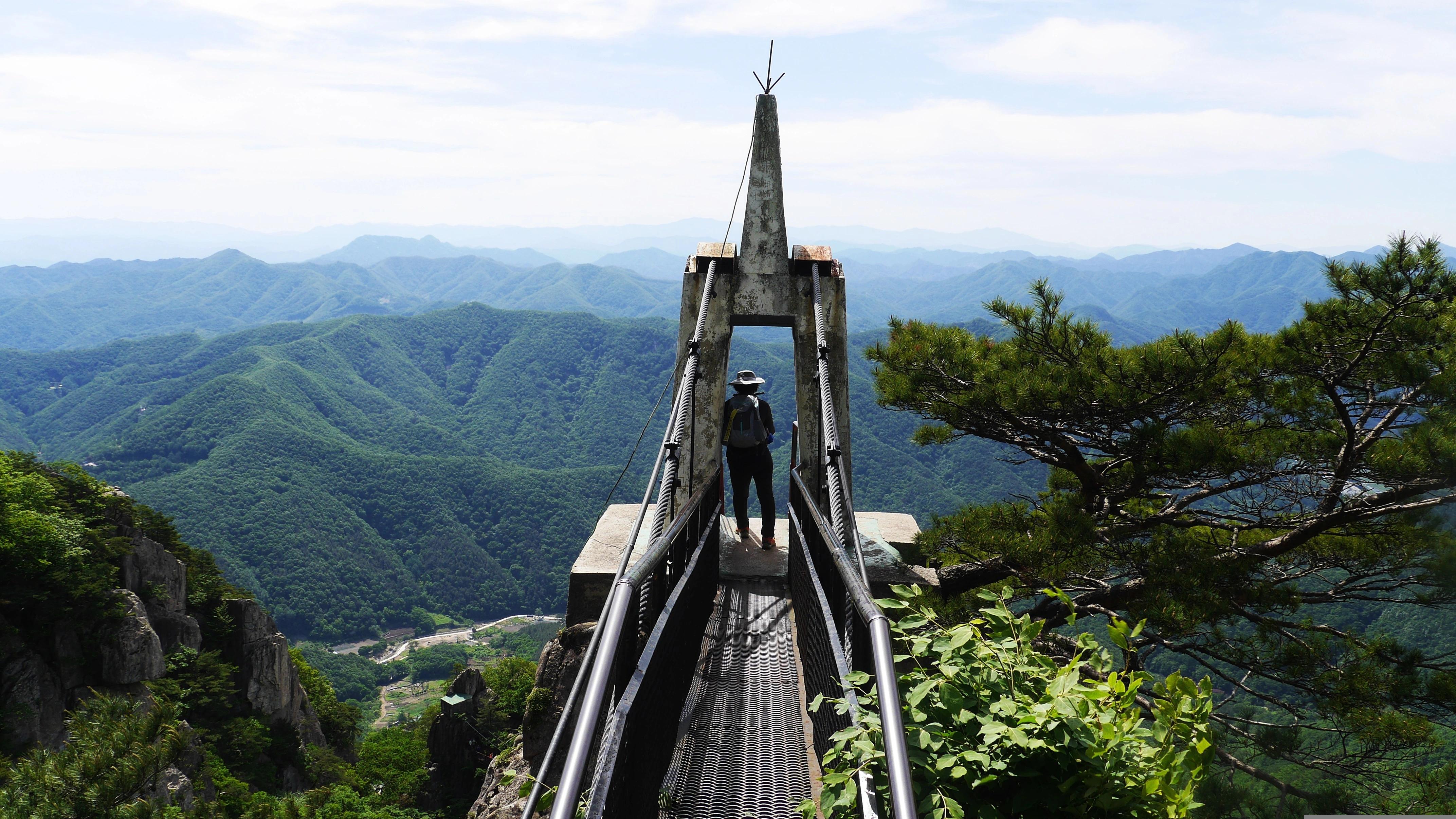
Daedunsan is an 878-metre mountain in Wanju, with a suspension bridge and a steep clifftop stairway near the summit. A cable car covers most of the ascent, so you can get to the bridge and stairs without climbing all the way up. It's the furthest trip on this list, best done as a long day or paired with Jeonju.
Why we added Daedunsan to our list
Daedunsan is known for two main highlights, and you can see both in a couple of hours at the top.
- Geumgang Cloud Bridge, a red suspension bridge, 50 metres long and 1.2 metres wide, hanging 81 metres above the valley between two granite peaks.
- Samseon Stairway, a 127-step steel ladder-bridge, 36 metres long at a 51-degree angle, climbing to a higher rock platform above the bridge.
The cable car ascends a 927-meter route to the upper station in about six minutes. After that, there’s a rocky stretch to walk before the bridge. The stairway beyond it is also steep and we'd recommend taking the cable car both ways rather than attempt the full climb as a day trip.
How to get to Daedunsan from Seoul
By car, it takes 2 to 3 hours to reach Daedunsan from Seoul, heading south into Jeollabuk-do. By public transport it's longer, usually a train to Daejeon or Jeonju, then bus 34 from Daejeon Seobu terminal to the Daedunsan stop, totalling 3 hours or more each way.
- Given the distance, we'd recommend this Daedunsan Day Tour from Seoul, which includes a ride in the cable car and crossing the Geumgang Cloud Bridge. This way you don’t have to worry about driving, or combining Daedunsan with a night in Jeonju. (Affiliate link, this earns TripJuggler a small commission at no extra cost to you).
When to visit Daedunsan
Late October to early November is the best time to visit Daedunsan, because of the autumn colours. But, it's also the busiest part of the year, so arrive early to beat the weekend queues for the cable car which opens around 9am. If you’re visiting in winter, keep in mind the snow and ice, which makes the stairway harder to climb.
6. Gwangmyeong Cave, 30 minutes from Seoul
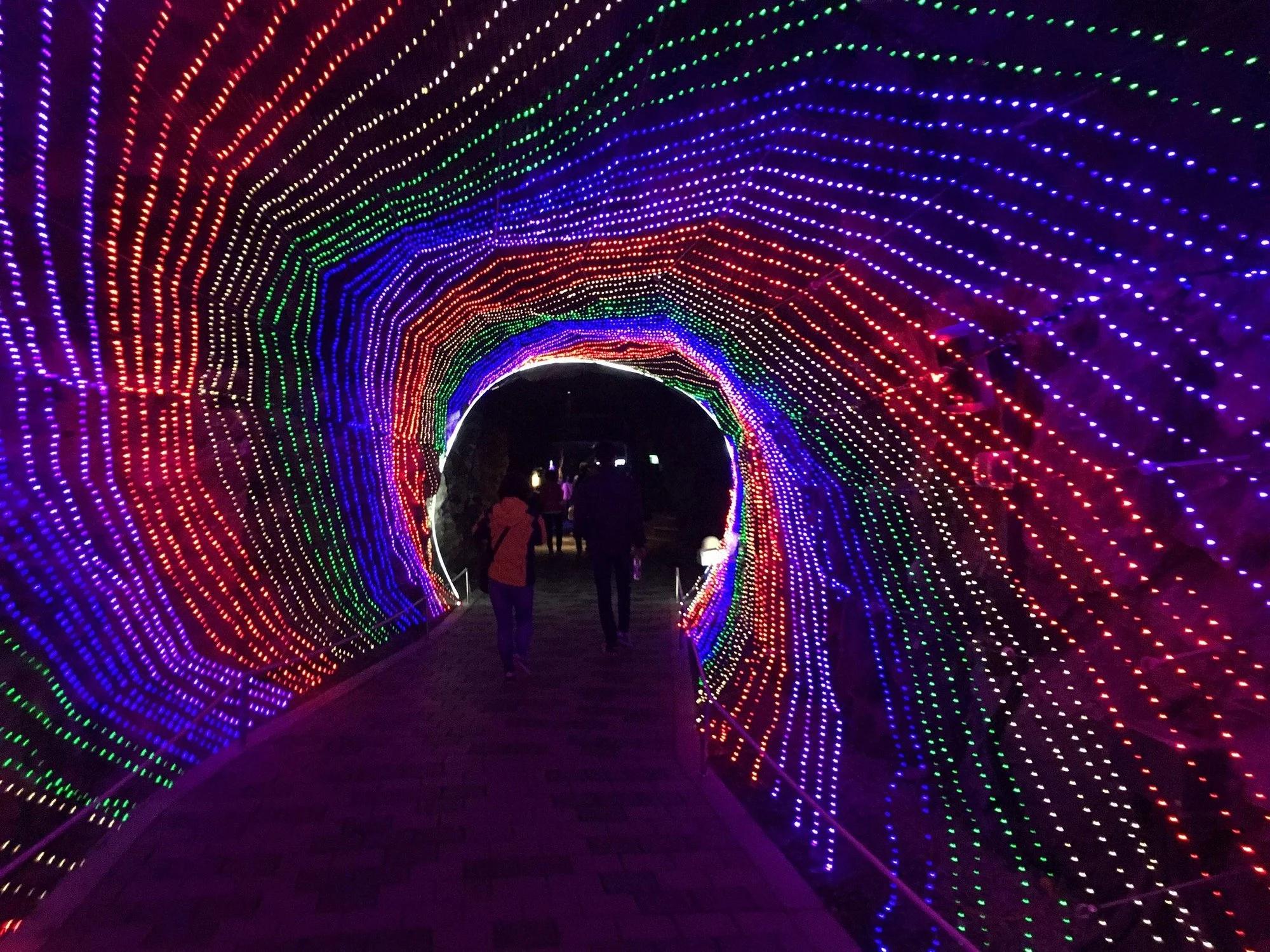
Gwangmyeong Cave is a former gold mine turned underground theme park, about 30 minutes from central Seoul. The gold mine closed in 1972, but today, it holds light shows that run continuously throughout the day, and features an underground lake, aquarium, and a wine cellar cut into the rock. The temperature stays around 12°C inside all year, making it one of the best day trips from Seoul in high summer.
Why we added Gwangmyeong Cave to our list
Being so close to the city center, this is the easiest day trip to add into your Seoul travel itinerary. As we mentioned, its cool temperatures make it great in the summer, and it’s a great one whether or not you have children with you.
How to get to Gwangmyeong Cave from Seoul
By car, it takes around 30 minutes to reach Gwangmyeong Cave from Seoul, with parking at the site. By public transport, take Subway Line 1 to KTX Gwangmyeong Station, leave by Exit 7 or 8, then bus 17 for the short ride to the cave.
There's also a shuttle train from Geumcheon-gu Office, which leaves roughly once an hour.
When to visit Gwangmyeong Cave
Summer is a nice time to visit Gwangmyeong Cave, because the 12°C interior is a relief from Seoul's heat, but you can visit year-round. Bring a light layer whatever the season, as the cave feels cold after a while. The BLACK LIGHT show is on weekends, where colourful light patterns are reflected across the walls of the cave.
- Thinking of adding a Gwangmyeong Cave day trip to your Seoul itinerary? Add this article to your trip board on TripJuggler and we’ll automatically turn your ideas into a mapped day-by-day itinerary.
7. Garden of Morning Calm
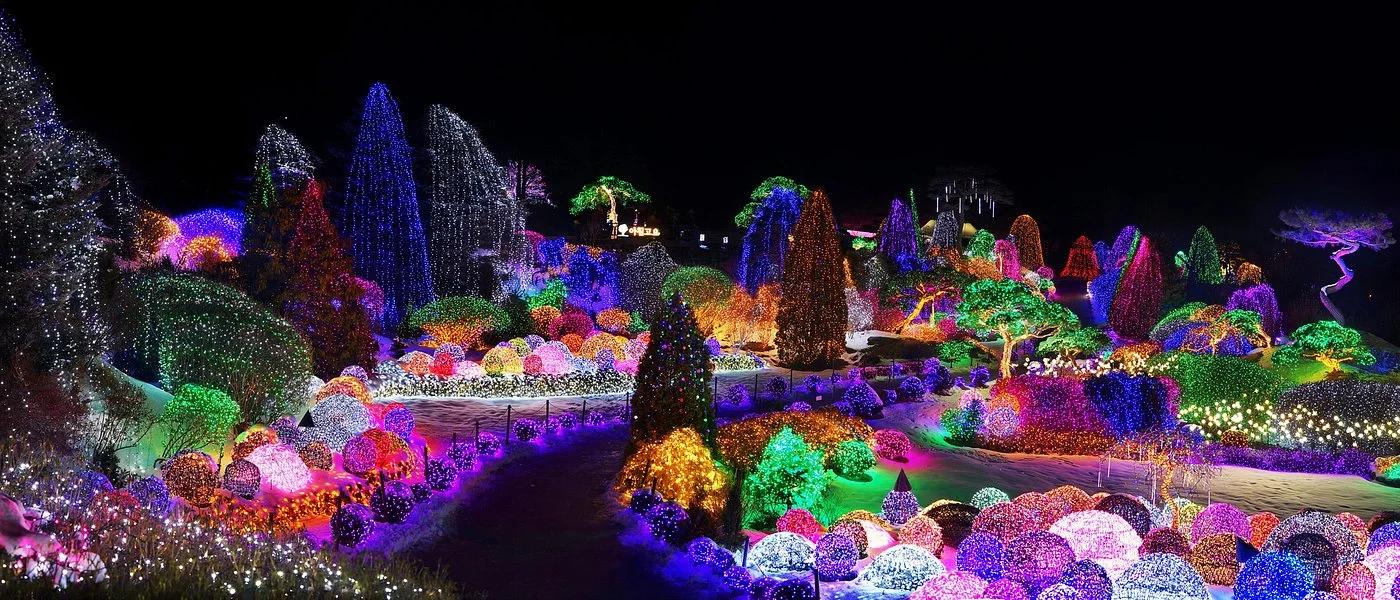
The Garden of Morning Calm is Korea's oldest private garden and it’s set across a hillside in Gapyeong about 1.5 to 2 hours from Seoul. It's open year-round, but the most popular event is the winter Lighting Festival, when eco-friendly LED lights are set up across the grounds from December to mid-March. It’s close to Nami Island, and the two pair well for a day trip.
Why we added Garden of Morning Calm to our list
The Lighting Festival is the biggest and longest-established winter lights event in Korea. From December to mid-March the garden is open into the evening, with themed sections like the Metasequoia pathway and the sunken garden. The 330,000 square metre site is also beautiful in spring when the azaleas fill whole sections of the hillside, and in autumn when the colours change.
How to get to Garden of Morning Calm from Seoul
By car, it takes 1.5 to 2 hours to reach the Garden of Morning Calm from Seoul, heading east into Gapyeong. By public transport, take the ITX-Cheongchun train from Yongsan or Cheongnyangni to Cheongpyeong Station, around an hour, then the Gapyeong City Tour Bus or a taxi for the final 20 minutes. The tour bus is a hop-on-hop-off service linking the garden with Nami Island and other Gapyeong stops.
When to visit Garden of Morning Calm
Winter evenings are the best time to visit the Garden of Morning Calm, for the Lighting Festival between December and mid-March. Outside those months, spring and autumn are the better daytime seasons based on colours. If you're coming in winter, don't arrive too early, as the lights won’t switch on until dusk. Dress warmly, since Gapyeong gets colder than the city.
8. Nami Island
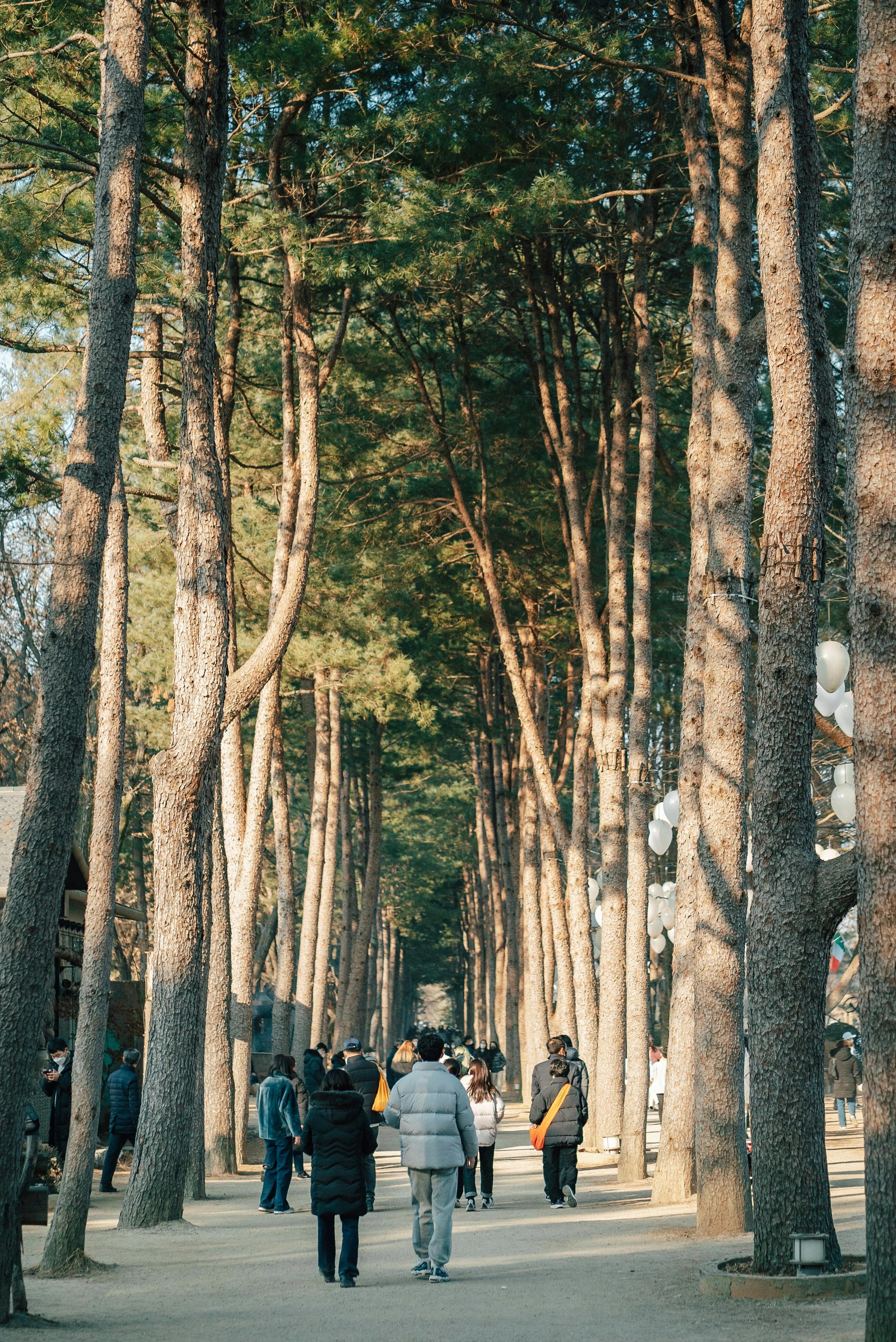
Nami Island is a small, tree-lined island on the Bukhangang River in Gapyeong, about 1 to 2 hours northeast of Seoul. It's best known as the filming location for the Korean drama Winter Sonata, and for its paths lined with metasequoia and ginkgo trees. The island was formed when the Cheongpyeong Dam flooded the river valley.
Why we added Nami Island to our list
Nami Island is one of the most popular day trips from Seoul, with around 3 million visitors a year. The whole island is walkable in a few hours, featuring tree-lined avenues, riverside paths and bike hire if you'd like to cycle it. It’s the easiest to combine with the Garden of Morning Calm.
How to get to Nami Island from Seoul
The best way to reach Nami Island from Seoul is via the ITX-Cheongchun train from Yongsan or Cheongnyangni to Gapyeong Station. It takes around an hour and costs about 6,000 to 8,500 won.
From Gapyeong Station, a taxi to the ferry terminal takes five minutes and costs 5,000 to 6,000 won, or bus 10-4 covers the same stretch. The ferry to the island goes every 30 minutes.
There's also an official Nami Island shuttle bus direct from Hongdae, Myeongdong and DDP for around $22 return. By car, it takes about an hour to reach Gapyeong Wharf from Seoul in light traffic.
When to visit Nami Island
Autumn is the best time to visit Nami Island, when the metasequoia and ginkgo avenues turn gold and red, usually late October into November. Spring is also great for seeing the cherry trees, and winter has the bare-tree look made famous by Winter Sonata. Whenever you choose to go, the island tends to be busiest between 10am and noon when the tour buses arrive. Keep in mind that the ferry runs until 9:40pm.
- To add Nami Island to your itinerary, pin the link to this article to your trip board on TripJuggler. We’ll extract all the details you need for the perfect Nami Island day trip from Seoul.
9. The DMZ
The DMZ (Demilitarised Zone) is the heavily guarded 4km-wide strip dividing North and South Korea, about an hour north of Seoul. It's one of the most visited day trips from the city, including the Third Infiltration Tunnel and Dora Observatory, which looks across the border into the North. Unlike everywhere else on this list, you can't visit the main DMZ sites independently. A booked tour is required.
How to visit the DMZ from Seoul, and what to see on the way
The first of two main sights at the DMZ is the Third Infiltration Tunnel, dug by North Korea under the border and discovered in October 1978. The second is Dora Observatory, where you can look across into North Korea. Both are beyond the Civilian Control Line, a military checkpoint that prohibits unguided entry.
You'll need a booked tour or the official shuttle, and your passport for the ID check. We'd recommend booking ahead, as slots sell out. Tours can also be cancelled at short notice if tensions rise.
Most tours head north through Paju and offer the Gamaksan Suspension Bridge as an optional stop. It's also called the Gloucester Heroes Bridge, after the British Gloucestershire Regiment who fought at the Battle of the Imjin River in 1951. Ungye Falls sits a short walk away on the same hillside.
- TripJuggler recommends: This DMZ tour from Seoul includes the Third Tunnel and Dora Observatory and skips forced shopping stops, which some cheaper tours build in. You can arrange hotel pickup, and this one also lets you add the Gamaksan bridge for a small extra fee. (Affiliate link, this earns TripJuggler a small commission at no extra cost to you).
FAQs about the best Seoul day trips
What is the best day trip from Seoul?
The best day trip from Seoul depends on what you want, but Nami Island is the most popular for its tree-lined avenues, and the DMZ is the most unique for its history. For nature, Bukhansan National Park and the Garden of Morning Calm are the strongest choices. Both are within two hours of the city.
Is a day trip to Busan from Seoul worth it?
Busan is possible as a day trip from Seoul on the KTX high-speed train, which takes about 2 hours 30 minutes to 2 hours 45 minutes each way. That leaves you with a long day and roughly 5 to 6 hours of travel. Take the earliest train, around 5:30am, and book ahead, as seats sell out. If you have the time, an overnight stay gives you a much better experience of the city.
Is it worth going to Nami Island?
Yes. Nami Island is one of the most popular day trips from Seoul, and the tree-lined avenues are genuinely beautiful, especially in autumn when the metasequoia and ginkgo turn gold and red. It does get busy with tour groups between 10am and noon, so go early or mid-afternoon. The island is flat and walkable in a few hours, with bike hire if you want it. Entry and ferry combined cost 19,000 won.
Can I visit the DMZ without a tour?
No. The main DMZ sites, including the Third Infiltration Tunnel and Dora Observatory, sit beyond the Civilian Control Line, a military checkpoint that civilians cannot cross independently. You need a booked tour or the official shuttle, and you'll need your passport for the ID check. Book ahead, as slots fill up and tours can be cancelled at short notice if tensions rise.
How do I get to the beach from Seoul?
The closest beach to Seoul is Eurwangni Beach, near Incheon Airport, about 50 minutes by car or 1 hour 45 minutes by public transport. Take the AREX airport train to Incheon International Airport, then a local bus (302, 306 or similar) to the beach. It's busiest in August, when the sea is warmest.
- Read next: What is a travel itinerary?