How to plan a trip comes down to choosing your dates and budget, then booking your flights and accommodation, and finally collecting your ideas and organising them into a day-by-day plan. Planning in that order is important, because flight prices rise with time, and knowing where you’re staying helps you plan your activities.
Most of these steps aren't hard, but it can be overwhelming. This guide walks through each step to help you learn how to plan a holiday in the simplest way possible.
Where do I start when planning a trip?
Start by choosing your dates. If you can, avoid school holidays which are expensive times to travel. Bank holiday weekends are also more expensive, and busier. If you're flying, use Skyscanner's month calendar view, which shows you which days are cheapest to fly in and out.
Once you've chosen a couple of potential dates, check what that time of year looks like where you're going. Temperature and rainfall are the obvious ones, but you should also consider whether there are any events or holidays taking place while you're there. Some cities have festivals or public holidays which attract big crowds, and could mean closures.
Then look at where to stay. Don't worry about choosing accommodation yet, but consider which area you'd like to be based in. Consider your proximity to cafes and restaurants, public transport stations, beaches, sights or whatever you'd like to prioritise.
What should I book first?
Flights should always be booked first. Flight prices rise all the time, so prioritise this to get the best deal. How far in advance you do this is going to depend on the type of trip you're planning, but for the average trip, book no later than three months before you leave.
Next, book your accommodation. My go-tos are Airbnb or Booking.com which usually include free cancellation up to a certain point if you change your mind. Make sure to check the host's individual cancellation policy before booking.
Now that you've booked the main components, you can stop thinking about logistics for a while and focus on what you want to do when you're there. For me that's watching YouTube travel videos, reading blog posts, and saving a few reels and tiktoks.
How to organise a trip
The simplest way to organise a trip is to plot your saved places on a map, group the ones near each other into days, and choose an order that flows. You can do this manually, or let a tool like TripJuggler do it for you.
Doing it yourself means going back through the blog posts, videos and social media posts you've been saving, writing down every place, plotting them on a map, and grouping them into days based on location. It works, but it's time-consuming, and I find it can really cramp the excitement of an upcoming trip.
A quicker option is to collect your inspiration in a Trip Board on TripJuggler as you go. When you find blog posts, travel videos, reels, tiktoks, add them straight in. Unlike a saved folder, they won't just sit there. TripJuggler reads the content you add and extracts each individual place, so a single YouTube video might give you fifteen ideas you'd have otherwise had to find yourself.
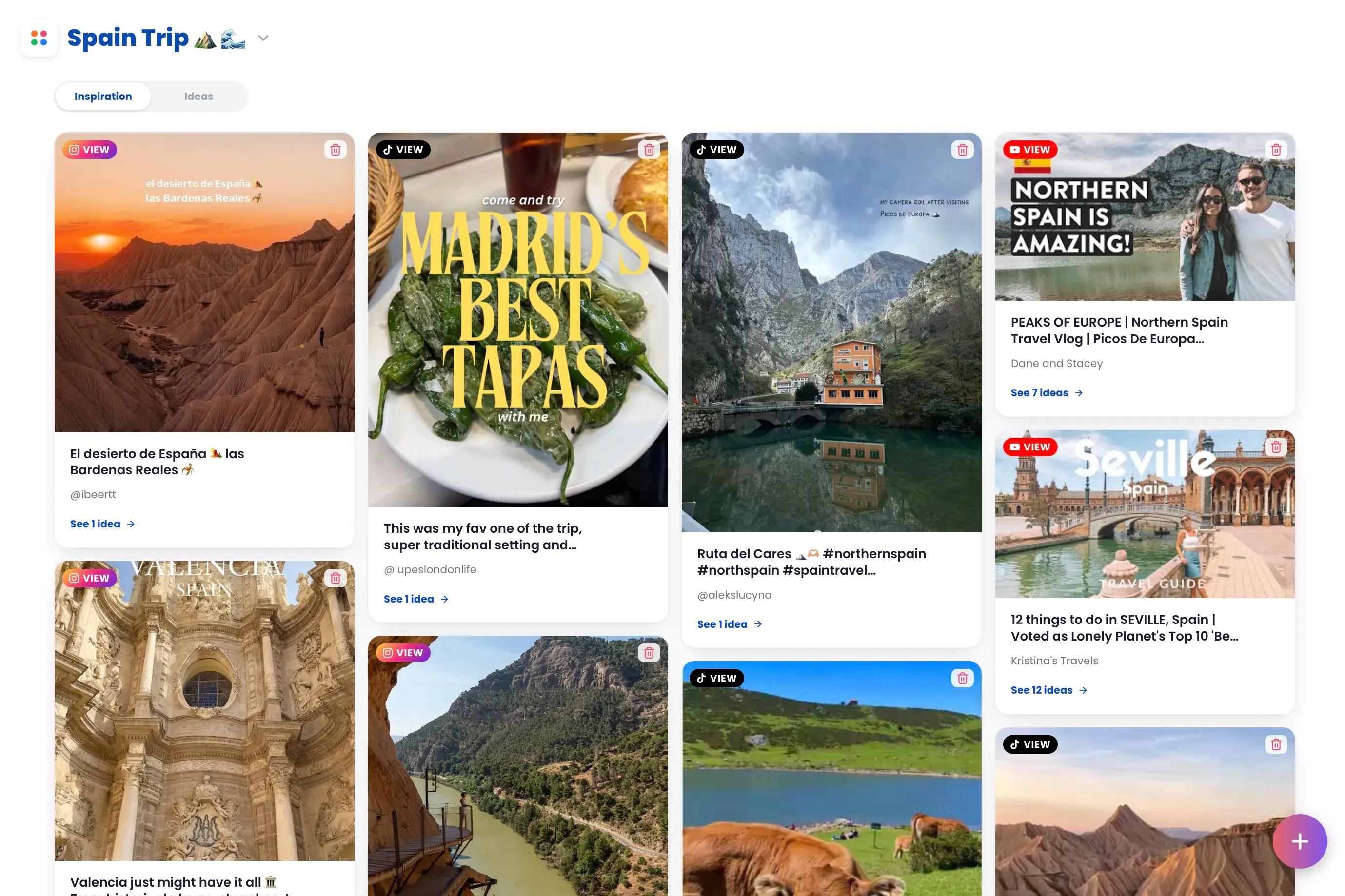
Once your ideas are in TripJuggler, the places have already been extracted for you. From here, you can build the itinerary yourself using the map and timeline, or have TripJuggler build it for you automatically. Either way, share the plan with anyone you're travelling with or friends and family following along from home.
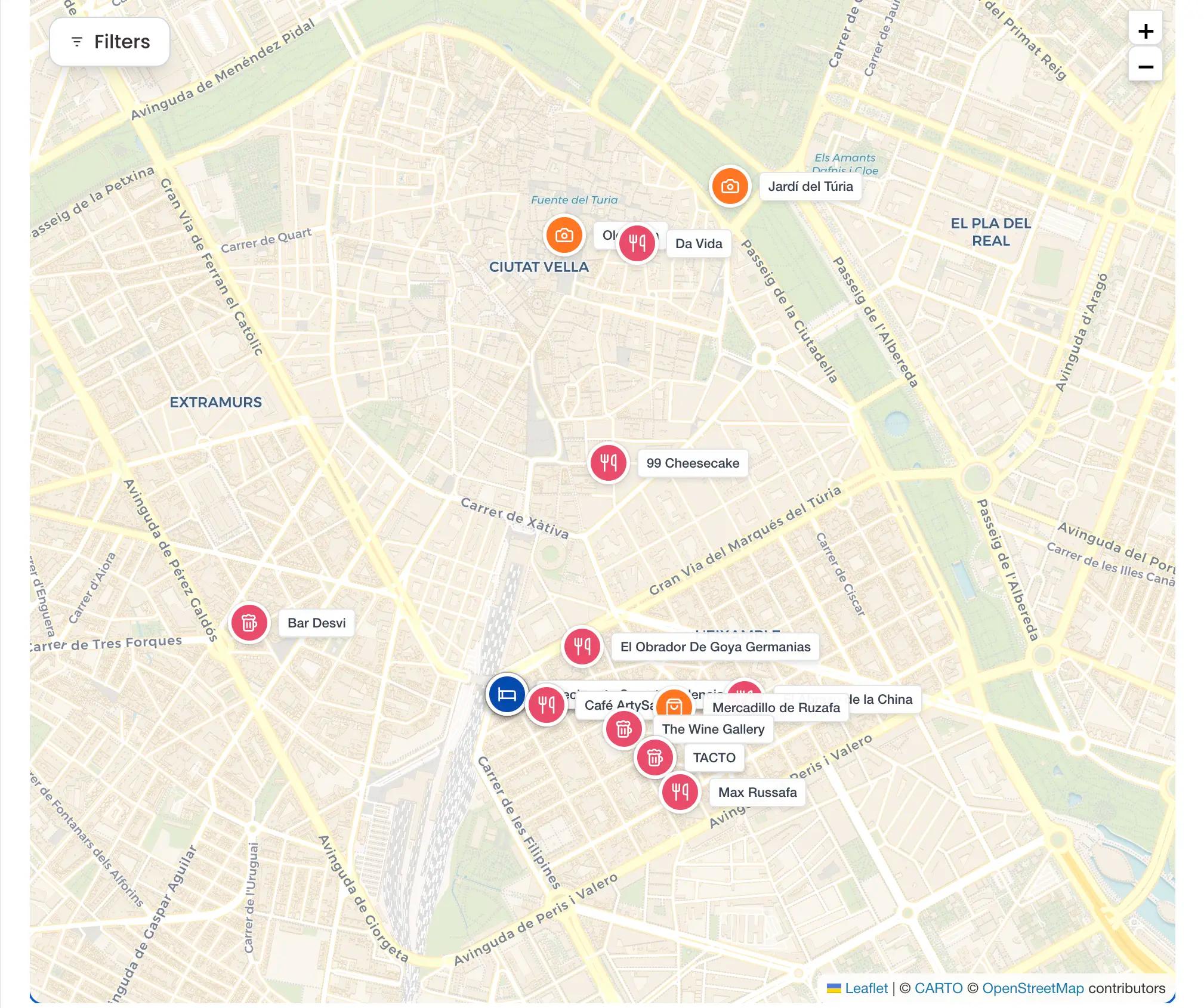
If you want to know more about what goes into a good itinerary, we cover that in our What is an itinerary? guide.
How much of the trip should I plan in advance?
Book in anything that could sell out, like guided tours, experiences, or a popular restaurant. But there's a fine line, and over-booking can make a trip feel stressful if you're constantly rushing to stay on track with your itinerary. Book enough to feel prepared, but not so much that there's no room for spontaneity when you're there.
How detailed your plan needs to be depends on where you're going. A city break with good public transport and endless food options won't need as much structure as a road trip where you're changing accommodation every few days. There's no one size fits all, so match the level of planning to the type of trip and how organised you want to feel.
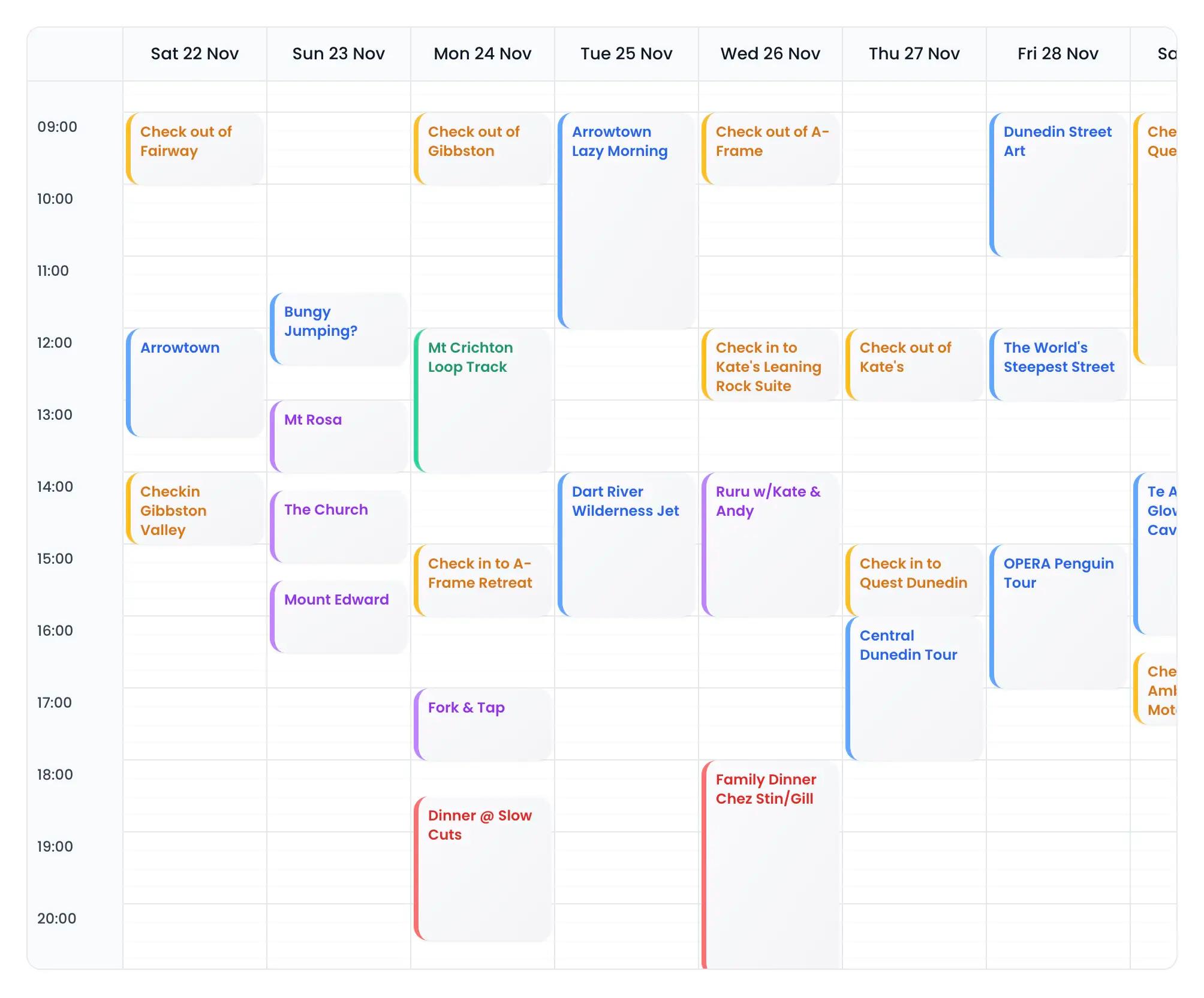
If you want an example, take a look at Maia's three-day Valencia city break and Andy's six-week New Zealand road trip to see how different trips need different levels of planning.
What are common trip planning mistakes?
Common trip planning mistakes include cramming too many activities into a single day, not researching local transport, not checking opening times, and not sorting practicalities like mobile data and travel money before you leave. Most of them are easy to avoid with a bit of research before you go.
TripJuggler Recommends
We've tried a few options for travel money and mobile data abroad, and these are the two we like best. Read our Wise review for a multi-currency card, and our Saily review for an eSIM.
FAQs
What are the 5 stages of travel planning?
The 5 stages of travel planning are choosing your dates, booking flights, booking accommodation, collecting ideas for things to see and do, and organising those ideas into a day-by-day plan. TripJuggler handles the last two stages for you, letting you collect inspiration and turn it into a structured itinerary in minutes.
How to use Google Maps to plan a trip?
To use Google Maps to plan a trip, save the places you want to go and add them to a list. You'll then need to group nearby places into days yourself to avoid doubling back on yourself. A quicker way is to add your ideas into TripJuggler, which finds them on a map and groups them by location and day in minutes.
How to plan a trip for beginners?
To plan a trip for beginners, first choose dates, then book flights, then accommodation. Collect inspiration from social media posts, blogs and articles for things you want to see and do. Add everything to a TripJuggler Trip Board and it will turn your ideas into a mapped, day-by-day itinerary for you. It takes a couple of minutes and you don't need to build a spreadsheet or plan anything yourself.
Can I use ChatGPT to plan a trip?
Yes, you can use ChatGPT to plan a trip, but the output is static text. TripJuggler gives you a visual, interactive itinerary with your stops pinned on a map, your bookings alongside your plan, and views you can switch between. You can add photos and notes as you travel and keep it as a journal after you're home.
Which trip planner is best?
The best trip planner depends on how you like to plan. Google Maps is useful for saving places and seeing where they are. Spreadsheets and Notion give you full control over every detail. TripJuggler lets you collect inspiration from social media, YouTube videos and blog posts, then turns those ideas into a mapped, day-by-day itinerary automatically. Collecting ideas and building your own itinerary is free.
- Read next: What is a travel itinerary?